DOOR
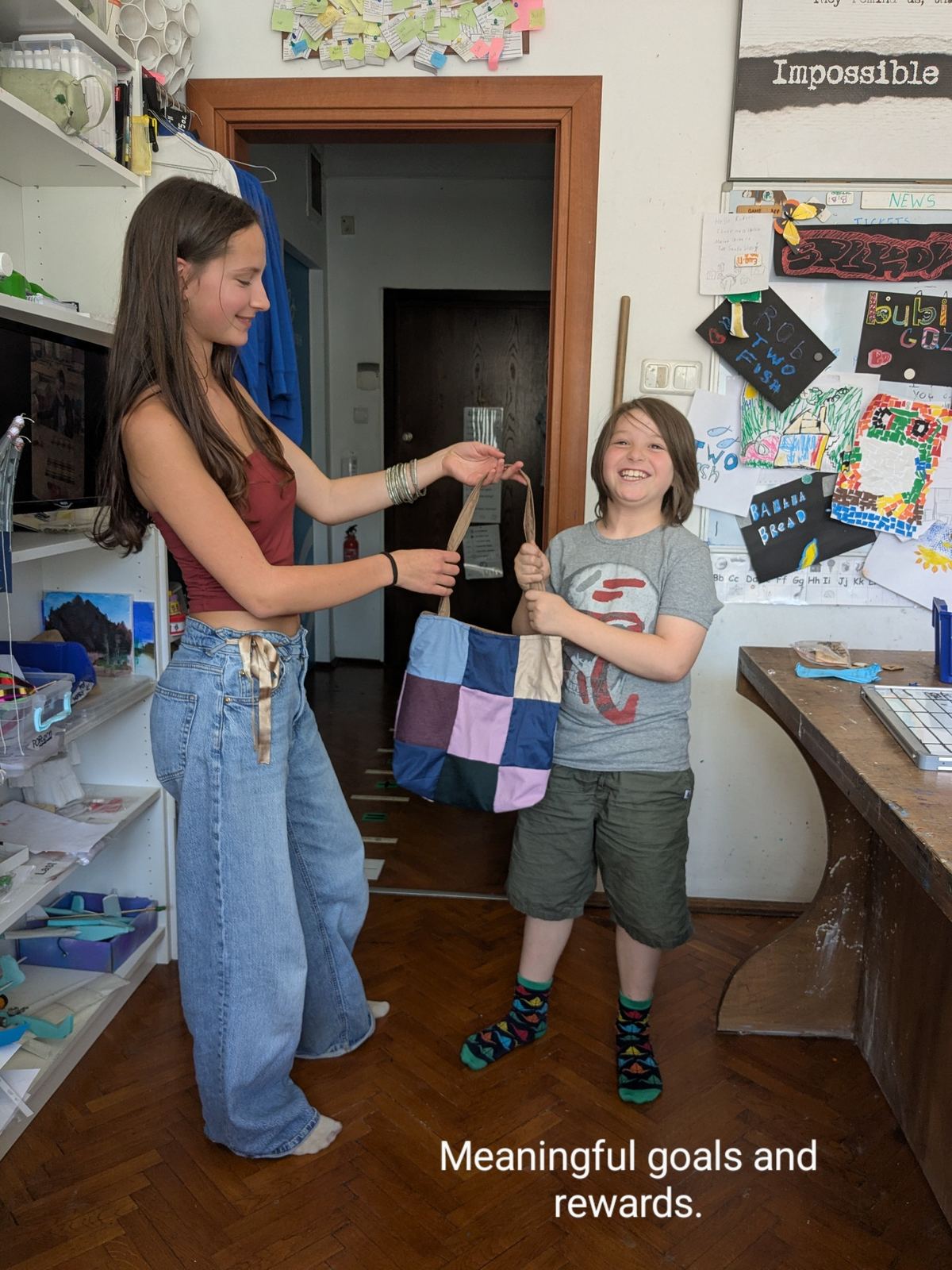
Children enter through the Declaration of Ownership & Responsibility. They are not entering a lesson where everything is decided for them. They are entering a game where ownership matters.
How It Works
A rich and dynamic acquisition environment.
TwoFish is not a lesson where everything is decided in advance. It is a live, structured environment in which children are free to explore, connect, create, reflect, and use English through real participation.
TwoFish does not teach English in the traditional way. Children inhabit a rich environment where they are free to explore, interact, and participate in English.
Because the environment and opportunities are meaningful, they begin to acquire the language more naturally. This is closer to the way children learn their first language: through use, immersion, feedback, and real application.
The sequence is simple. Children enter the game, discover what matters, connect with others, negotiate needs, create in real time, and then reflect on what happened.
Children enter through the Declaration of Ownership & Responsibility. They are not entering a lesson where everything is decided for them. They are entering a game where ownership matters.
TwoFish does not begin by forcing every child into the same task. Children are first given room to explore, play, and discover what matters to them. Ideas often surface there.
As children settle, connect, and begin talking, ideas become clearer. They plan, recruit others, negotiate needs, and gather materials.
The centre of the game is active creation. Children build projects, invent games, solve problems, complete challenges, and test ideas in real time.
The session closes with a tidy-up and formal reflections on what happened and what was learned. Insights are given time to integrate.
Through the game, value, exchange, and consequence emerge. Children can complete challenges, earn fish coins, buy and sell, and begin to understand value creation in practice.
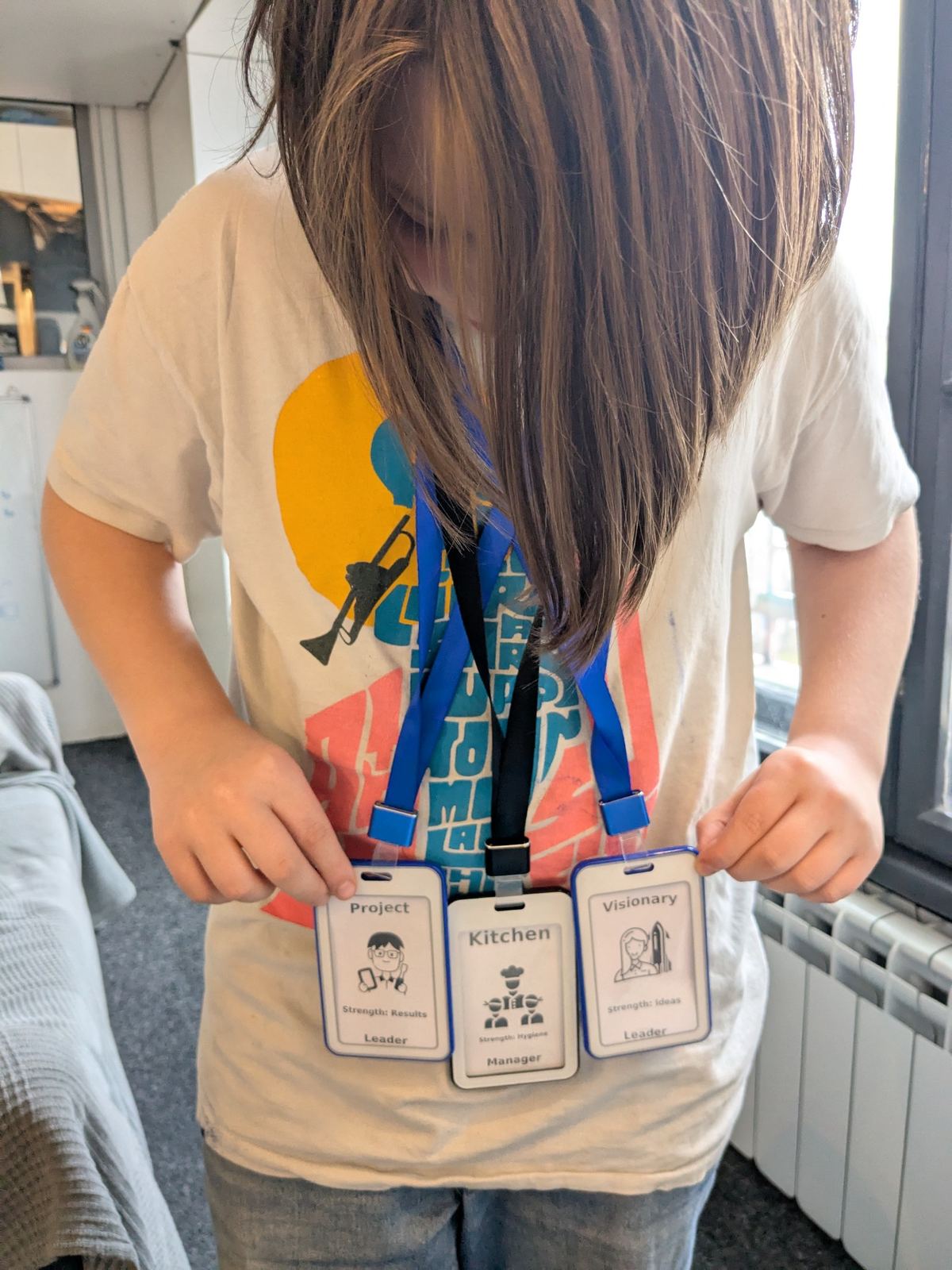
Different children enter the game differently and contribute in different ways. Over time, roles emerge. Older players help lead younger players, and peer models become part of the environment itself.
In TwoFish, mixed ages and levels are not a problem to manage. They are part of what makes the environment work.
Older players model language, behaviour, and leadership for younger ones. Younger players gain support, good examples, and more natural opportunities to ask for help and grow.
Adults and peer leaders adjust language to suit the child, so each player can participate meaningfully. Children do not all need to be held on the same plane for growth to happen.
English is not treated as a separate abstract subject sitting above the activity. It is used through projects, conversations, explanations, decisions, planning, games, and real participation.
That is why it becomes more natural, more spontaneous, and more useful.
That changes the quality of attention, the quality of speech, and the quality of growth. Children are not just listening to a lesson. They are entering a game-based environment where they must notice, decide, respond, contribute, and reflect.
The environment itself is a powerful teacher that helps bring English to life.
Next step
The clearest way to understand TwoFish is to see how the environment works when children enter it and begin to participate meaningfully.
Explore the summer sessions, or return to the parent page to see why this matters.